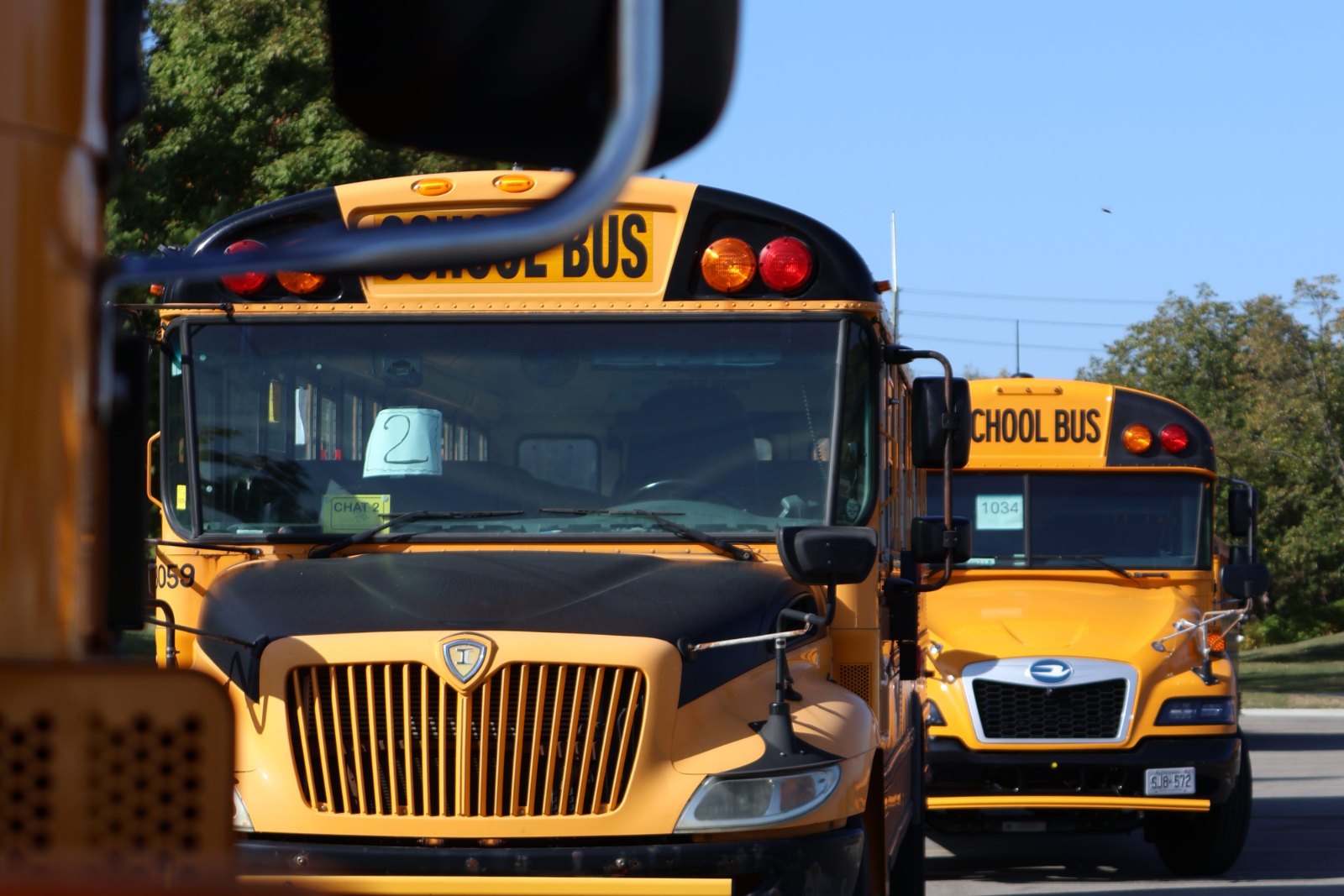
Most Florida school districts are back in session by the middle of August, and that changes the roads that loaded tri-axles use every morning. Buses stop every few hundred feet on residential collectors. Parent drop-off lines back up onto through roads. Children walk and bike on shoulders that were empty in July.
None of that is a reason to stop hauling. It is a reason to plan the day differently for a few weeks until the new patterns settle.
The two windows that matter
School traffic is concentrated, not constant. In most districts the pressure sits in a window around the start of the school day and a second one in the early afternoon, and elementary, middle, and high schools in the same area often stagger by an hour or more.
The practical result is that a delivery scheduled to arrive mid-morning or after the afternoon rush moves faster than one scheduled into either window, even though the mileage is identical. If a job site is on a residential route or anywhere near a school zone, moving a load by ninety minutes is often the difference between a clean run and a driver sitting in a queue.
What this means on the job site
If you are running a site this month, three things help:
- Tell dispatch where the school zones are. The people planning the day cannot route around a problem they do not know about. A single sentence when you book — "we are two blocks from an elementary school" — is enough.
- Book first loads earlier or later. Material that has to be on site at the start of the day is better arriving before the buses run than during.
- Think about where trucks stage. A loaded truck waiting on a residential street near a school at pickup time is a bad look and a genuine hazard. Staging a few streets back costs nothing.
What it means for the haulers we dispatch
The experienced haulers who run with us already know this ground. Still, August is a sensible time for a refresher:
- A loaded tri-axle needs considerably more room to stop than the pickup behind it. Following distance that felt fine in July is not enough on a street where a bus may stop without warning.
- Florida law requires drivers to stop for a school bus displaying its stop arm. The rules differ depending on whether the road is divided and how it is divided, and getting that wrong is both dangerous and expensive — it is worth checking the current statute rather than relying on memory.
- School zone speed limits are enforced during posted hours, and some Florida jurisdictions use camera enforcement in those zones.
- Blind spots do not care how careful you are. Children are short, quick, and unpredictable near a stopped truck.
Why we bother writing this
Because the alternative is worse for everyone. A trucking company that treats August like any other month ends up with late loads, frustrated site managers, and eventually an incident nobody wanted. A few weeks of deliberate scheduling costs very little and it keeps the work moving.
If you have a site near a school this term and you are not sure how to sequence deliveries around it, call dispatch and talk it through before you book. That conversation takes two minutes and it usually saves an hour.